Mahmoud Farshchian (born 1930, Isfahan) is a master of contemporary Persian miniature and one of the most influential figures in the evolution of Iranian painting in the 20th and 21st centuries. Trained under the renowned miniaturist Hajj Mohammad Taqi, he developed a deep foundation in classical techniques before innovating a dynamic and expressive visual language that transformed the miniature tradition.
Farshchian’s work is defined by elongated figures, fluid spatial compositions, intricate linework, and dramatic movement—elements that create dreamlike worlds rooted in Persian mythology, poetry, and spirituality. His style elevates classical miniature to new emotional and symbolic dimensions, blending traditional craftsmanship with modern aesthetics.
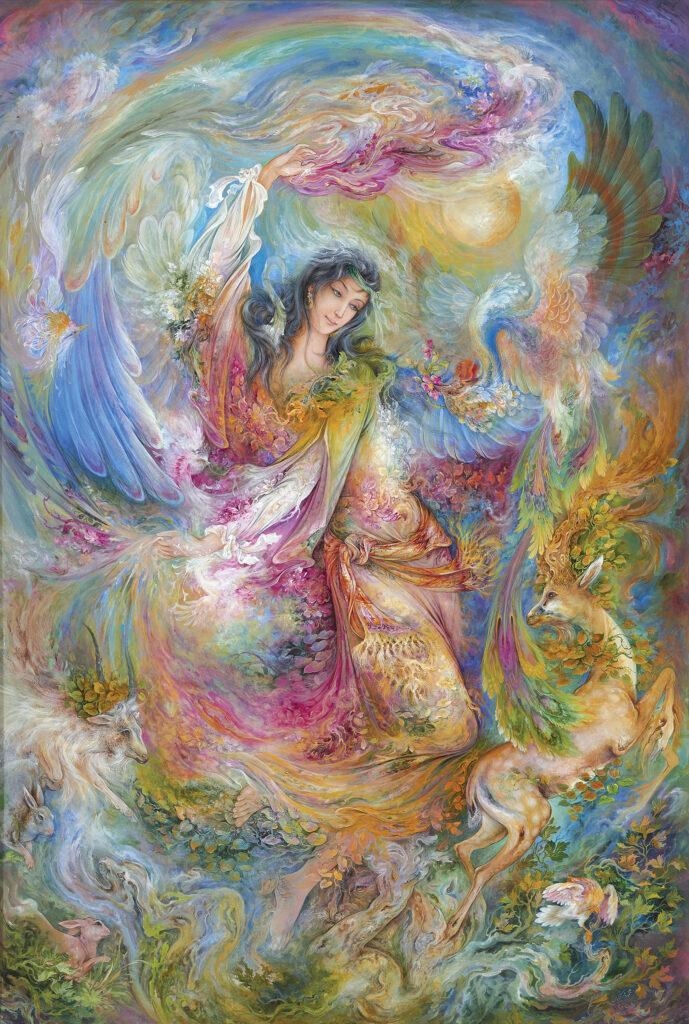
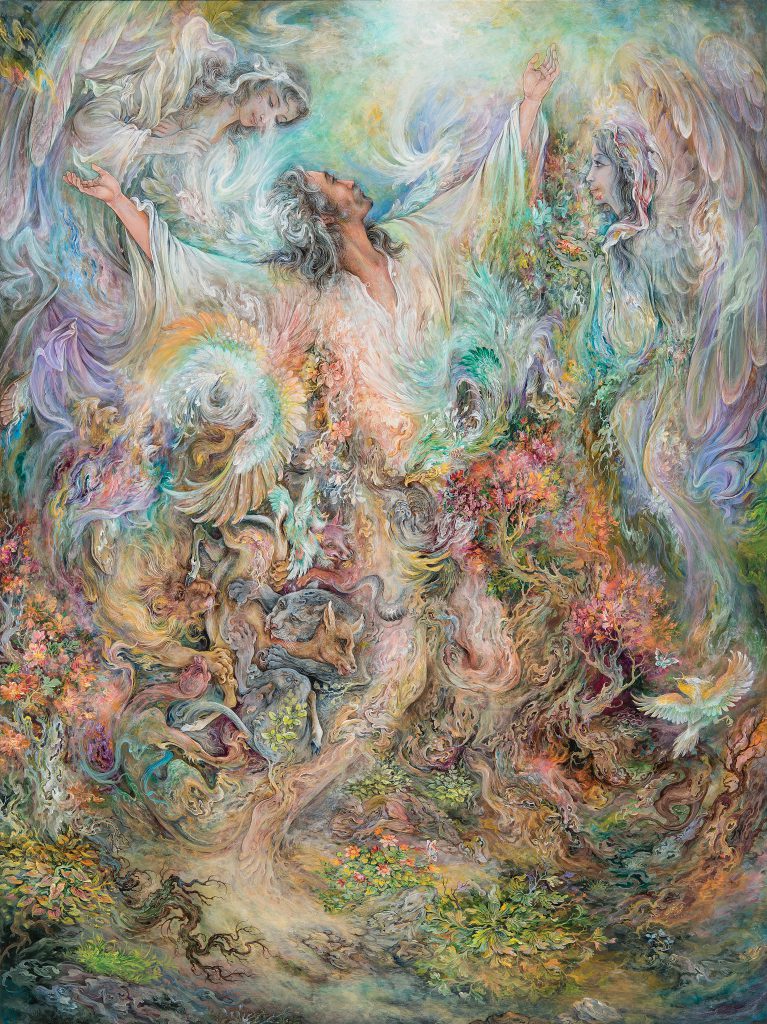
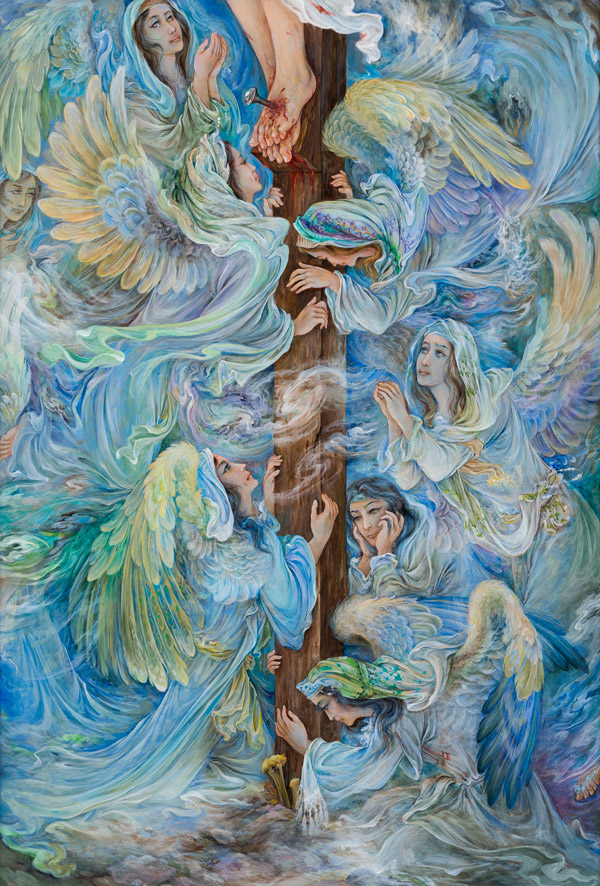
In the 1950s and 60s, Farshchian played a significant role in renewing Iranian miniature, introducing fresh formal possibilities while remaining faithful to the principles of Persian art. His paintings have been widely exhibited in Iran, Europe, and the United States, and his works are held in major public and private collections, including the British Library, the Freer Gallery of Art, and the Tehran Museum of Contemporary Art.
Farshchian is also celebrated for his influential contributions to book illustration, including acclaimed visual interpretations of Shahnameh, Divan-e Hafez, and religious narratives. His artworks, known for their spiritual resonance and technical mastery, continue to inspire new generations of artists and uphold his legacy as a transformative figure in the global understanding of Persian art.
Share It