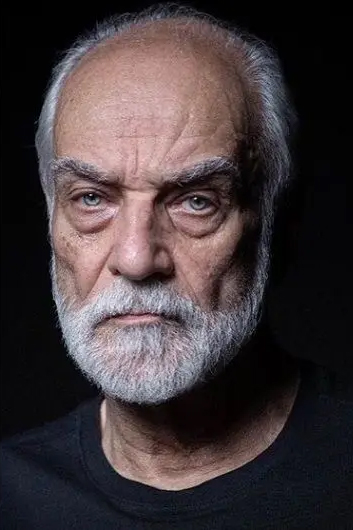
Aydin Aghdashloo (born 1940, Rasht, Iran) is an Iranian painter, art historian, critic, and educator whose work has played a defining role in the development of contemporary Iranian art. Known for his technically refined, symbolically rich, and conceptually layered compositions, Aghdashloo bridges classical Persian aesthetics with modern and postmodern sensibilities, creating a visual language that is both historically aware and intensely personal.
Aghdashloo demonstrated exceptional talent in drawing from an early age. After moving to Tehran, he studied at the Faculty of Fine Arts, University of Tehran, where he received structured training in anatomy, classical drawing, perspective, and art history. These formative years deepened his understanding of Western art traditions—Renaissance chiaroscuro, Baroque drama, and 19th‑century academic draftsmanship—all of which subtly informed his evolving visual vocabulary.
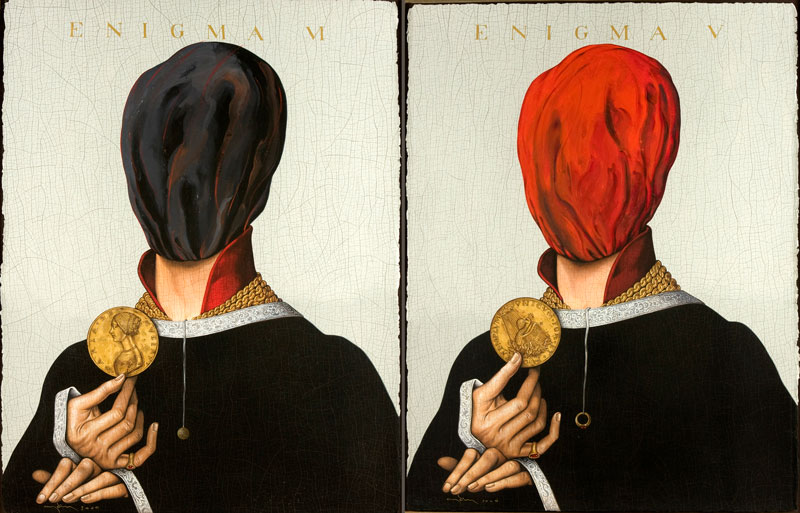
At the same time, he immersed himself in the visual heritage of Iran, studying Timurid, Safavid, and Qajar painting with the rigor of an art historian. This dual engagement—Western technique and Persian iconography—became the foundation of his mature style.
Artistic Practice and Major Themes
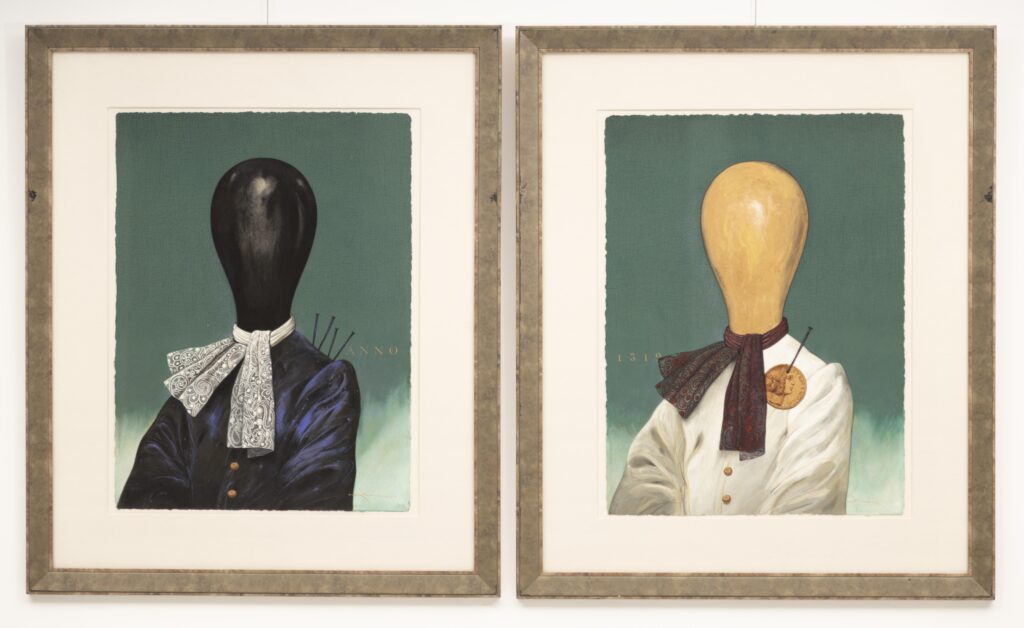
Aghdashloo’s paintings are known for their precise draftsmanship, controlled palette, and dense symbolic structure. By the 1970s he began producing the bodies of work that would shape his artistic identity:
- The “Memories of Destruction” series: Works centered on fragility, cultural loss, and the metaphysics of time. Cracked surfaces, eroded manuscripts, and disintegrating artifacts reflect the vulnerability of memory and heritage.
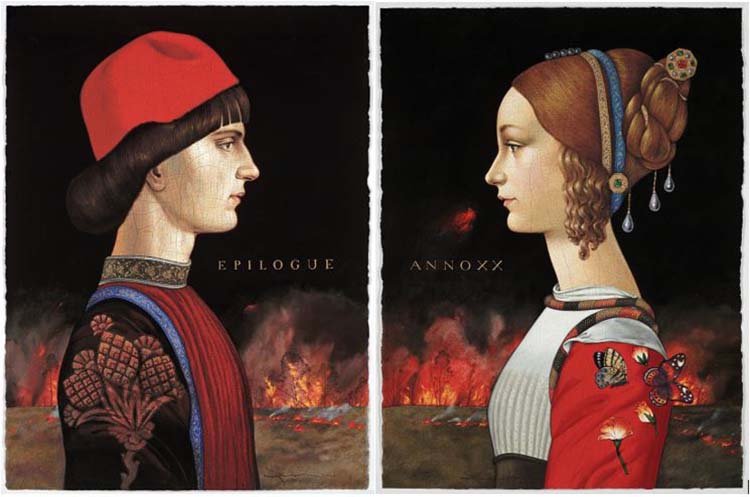
- The “Years of Fire and Snow” series: A more introspective approach, exploring emotional tension, isolation, and psychological landscapes.
- Reinterpretations of Persian Miniature: These works involve the creative reconstruction of Safavid and Timurid motifs, placing classical figures within contemporary conceptual frameworks. Instead of copying miniatures, he interrogates their structure, symbolism, and existential presence.
- Portraiture and Realism: Aghdashloo is also known for meticulously rendered portraits—often intimate, contemplative, and psychologically charged—demonstrating his mastery of classical draftsmanship.
Across his oeuvre, recurrent themes include temporality, decay, resurrection, myth, mythology, cultural continuity, and the tension between beauty and loss.
Work Beyond Painting: Writing, Research, and Cultural Commentary
Aghdashloo has had a significant impact not only as a painter but also as a writer and educator. Since the 1960s, he has published hundreds of essays on classical Persian art, Western art history, aesthetics, and the philosophical role of art in society. His writing is known for its clarity, historical insight, and ability to make complex art‑historical concepts accessible to a wide audience.
He has also collaborated with cultural institutions, curated exhibitions, and advised museums on issues of conservation, authenticity, and the interpretation of Persian manuscripts and miniature painting.
Design, Illustration, and Book Projects
Aghdashloo’s influence extends into graphic design, book illustration, and editorial work. His cover designs and illustrations for literary works—especially modern Persian literature—helped define the visual identity of several publishing houses in the second half of the 20th century. His visual sensibility, informed by both historical knowledge and contemporary minimalism, shaped the early aesthetics of Iran’s modern book culture.
Teaching and Influence
As a teacher and mentor, Aghdashloo has influenced a substantial number of Iranian artists, many of whom have become figures of significance in contemporary painting and illustration. His emphasis on disciplined craft, historical awareness, and conceptual rigor has shaped generations of practitioners.
Exhibitions and Collections
His works have been exhibited in Iran, Europe, and North America, appearing in private collections, cultural institutions, and specialized archives of Middle Eastern art. The blend of classical technique and contemporary intellectual inquiry has positioned his oeuvre as an important chapter in the narrative of Iranian modernism.
Legacy
Aghdashloo’s impact on Iranian art is multifaceted:
- As a painter, he expanded the expressive potential of Persian visual heritage.
- As an art historian, he contributed to a deeper appreciation of classical Iranian aesthetics.
- As a writer and educator, he played a crucial role in shaping the discourse of art criticism and art education in Iran.
His legacy is defined by intellectual depth, technical mastery, and a sustained dialogue between past and present.
Share It