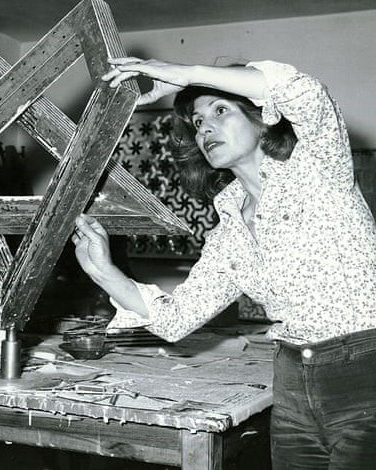
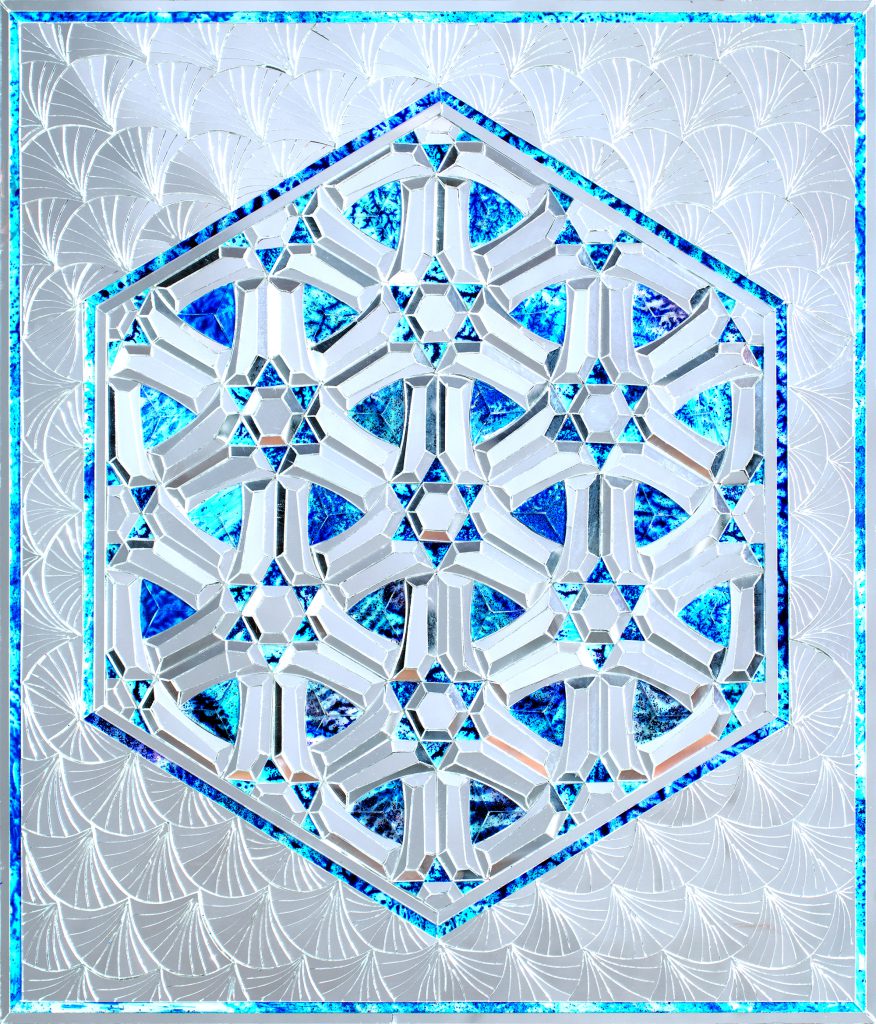
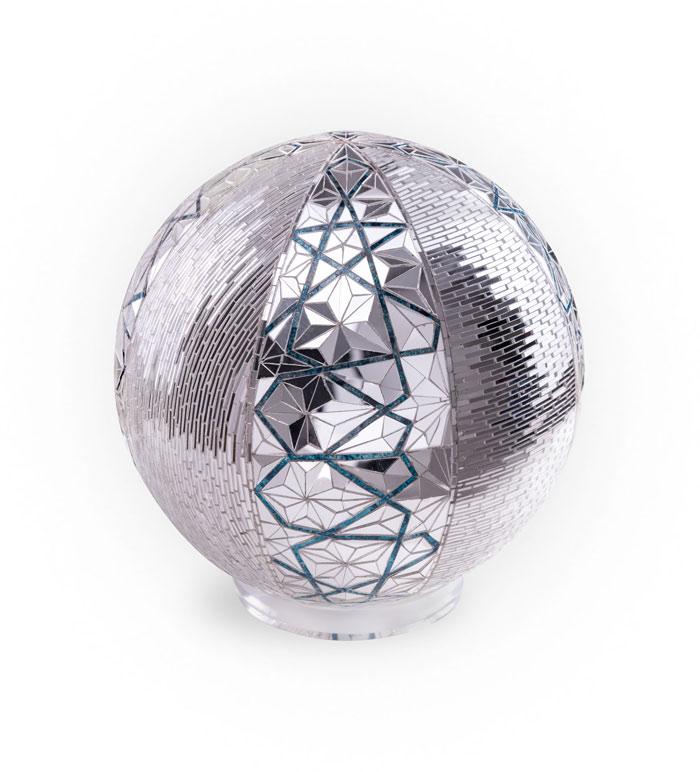
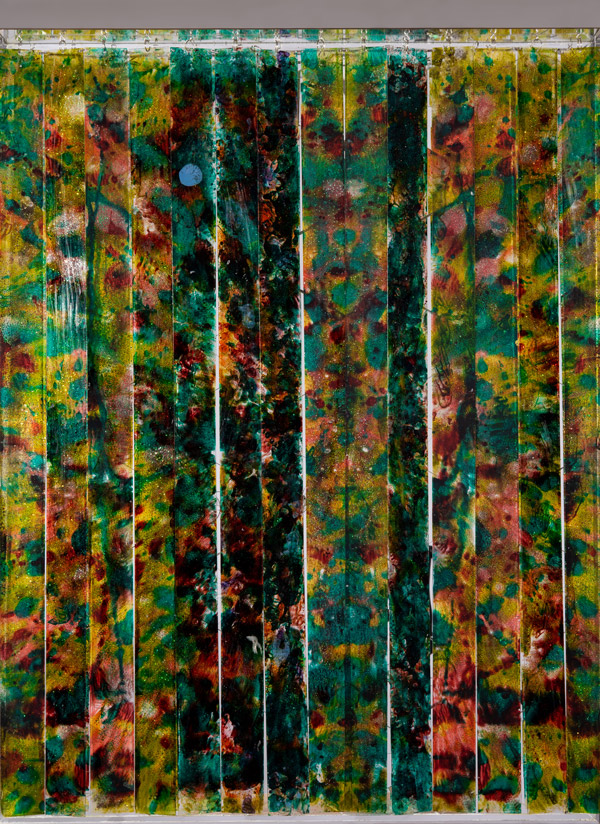
Monir Shahroudy Farmanfarmaian (1922–2019) was one of Iran’s most celebrated contemporary artists, internationally known for her radiant mirror mosaics and geometric constructions rooted in the visual language of Islamic architecture. Her practice fused centuries‑old Persian craftsmanship-particularly ayeneh‑kari (mirror mosaic) and reverse glass painting-with Western geometric abstraction, developing a groundbreaking artistic vocabulary where light, reflection, and mathematical precision converge.
Born in Qazvin and educated at Parsons School of Design, Cornell University, and the Art Students League in New York, Farmanfarmaian became immersed in the postwar American art scene, forming connections with artists such as Andy Warhol and Jackson Pollock. These experiences shaped her understanding of modernism, while her deep attachment to Iranian visual culture remained a constant source of inspiration.
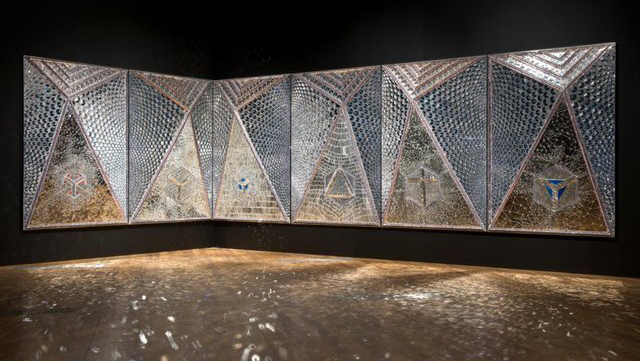
Returning to Iran in the late 1950s, she began collaborating with master artisans to reinterpret traditional mirrorwork into contemporary sculptural forms. Her works explore sacred geometry, cosmology, and the infinite play of light-transforming architectural ornamentation into luminous, meditative artworks. By the 1970s, she had become a central figure in Iran’s modern art movement.
Following the 1979 Revolution, Farmanfarmaian spent over two decades in New York, focusing on drawing, collage, and geometric studies due to her distance from Iranian materials and craftsmen. When she returned to Iran in 2004, she reestablished her studio and entered one of her most prolific creative periods, producing large-scale murals, cylinders, and intricate mirror reliefs.
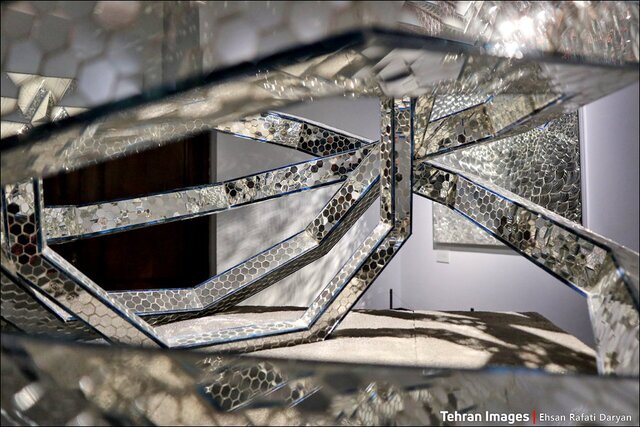
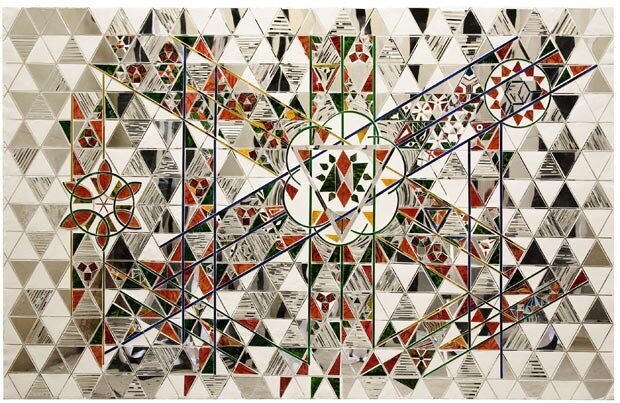
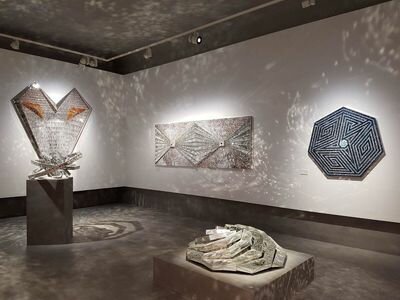
Her art has been featured in major institutions including the Guggenheim Museum (New York), where she received a landmark solo retrospective in 2015-the first Iranian woman to do so. Her works are held in the collections of the Metropolitan Museum of Art, the Victoria and Albert Museum, the Museum of Fine Arts Houston, the Sharjah Art Foundation, and the Tehran Museum of Contemporary Art.
Farmanfarmaian’s legacy continues to bridge tradition and innovation, positioning her as a transformative figure whose reimagining of Iranian mirrorwork reshaped global understandings of geometric abstraction and cross‑cultural contemporary art.
Share It