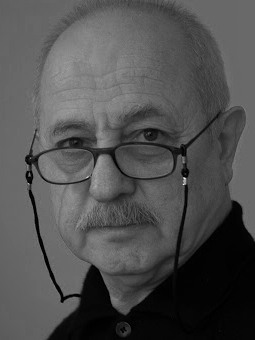
Mohammad Ehsaei (born in 1939, Qazvin, Iran) is widely recognized as one of the most influential figures in contemporary Iranian art and a pioneering master of calligraphy–painting (known as Naqqashi-Khat). He graduated from the Faculty of Fine Arts, University of Tehran, where he later served for many years as a professor of calligraphy, painting, and graphic arts. Ehsaei also contributed significantly to the professionalization of calligraphy through his active role in the Iranian Calligraphers Association.
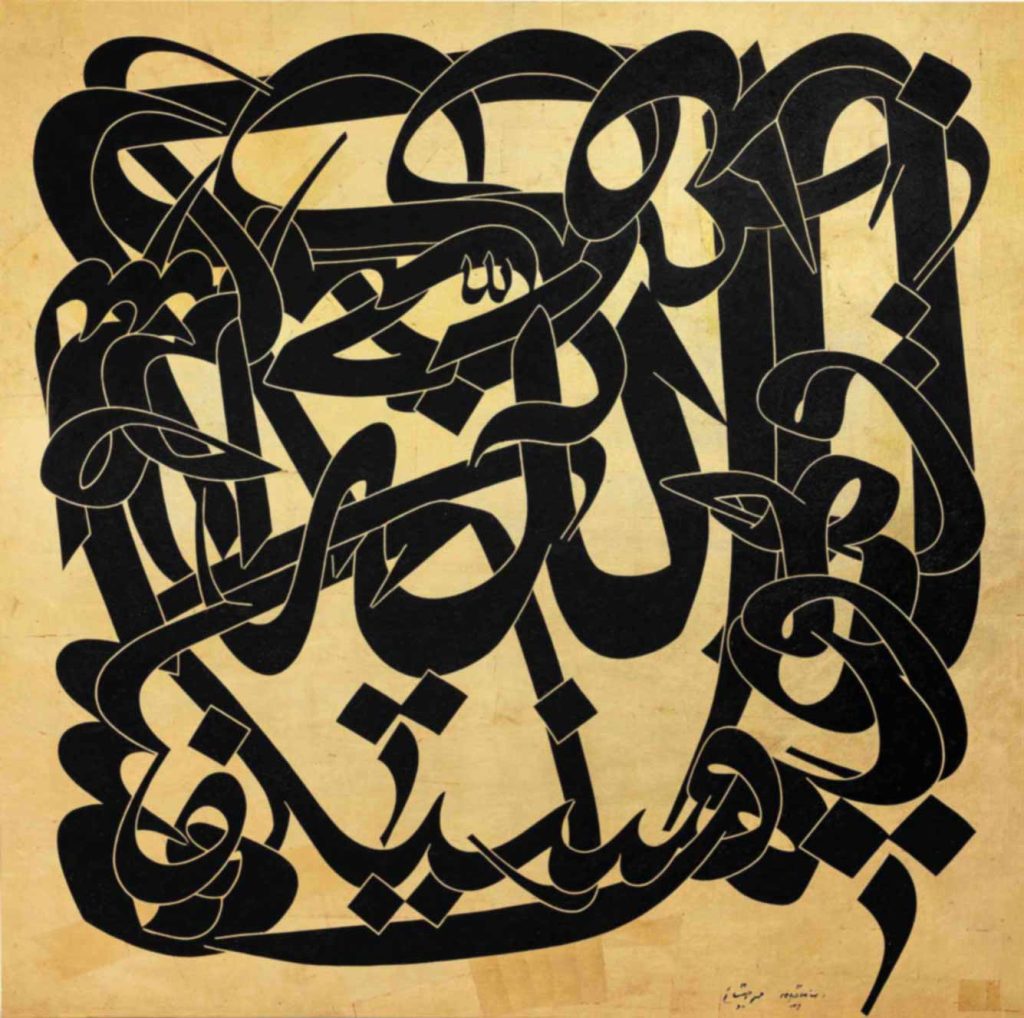
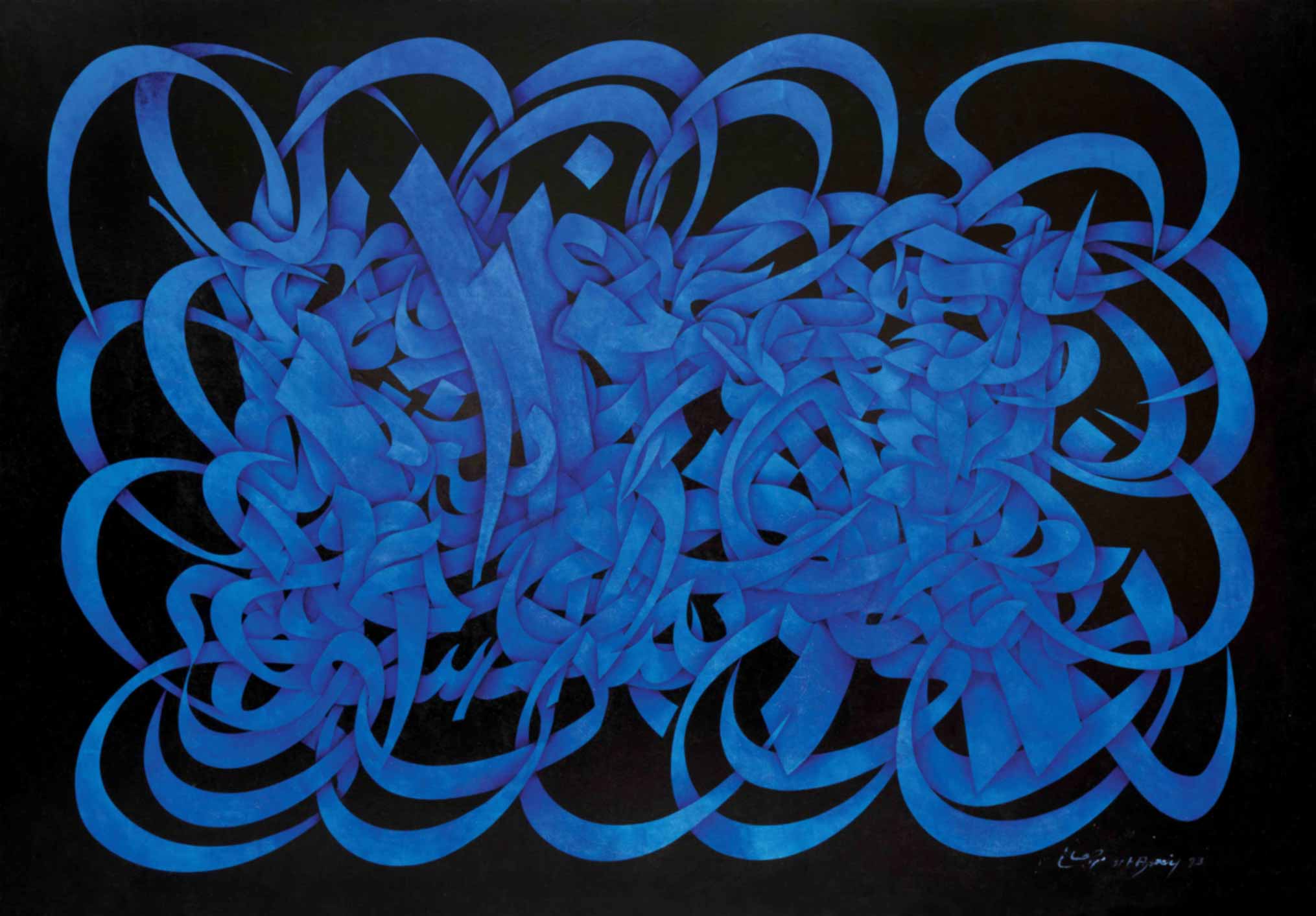
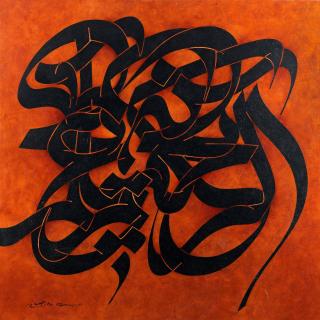
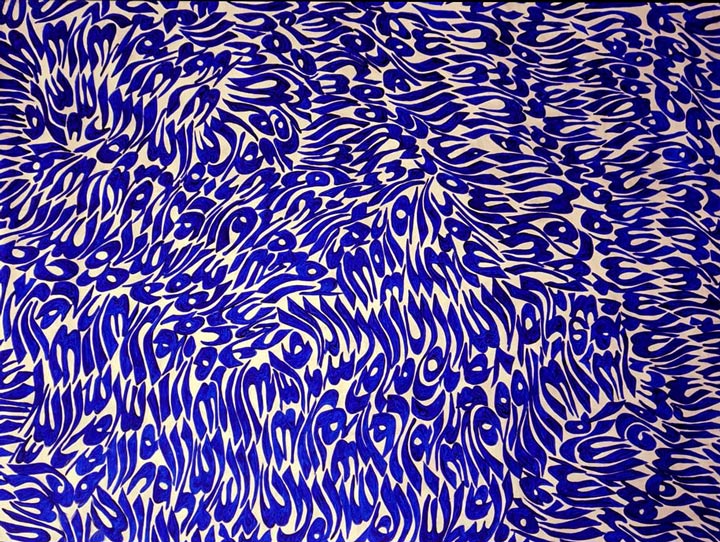
Emerging during the 1960s and 1970s, Ehsaei reshaped the visual language of Persian script by transforming traditional forms of Nasta’liq and Thuluth into independent visual structures. His innovative compositions—centered on rhythm, repetition, spatial balance, and the architectural quality of letters-helped establish calligraphy–painting as one of the defining movements of modern Iranian art.
Ehsaei’s works have been exhibited internationally in major cultural centers, including Paris, London, Dubai, and New York, and have been featured in renowned auction houses such as Christie’s and Sotheby’s. He has received numerous awards throughout his career and remains a central figure in bridging classical calligraphy with contemporary artistic expression.
Artistic Career of Mohammad Ehsaei
The artistic career of Mohammad Ehsaei began to take shape in the 1960s, a period during which modern Iranian art was actively exploring ways to connect traditional visual culture with contemporary artistic language. Trained in both painting and classical Persian calligraphy, Ehsaei gradually developed a practice that merged these disciplines, eventually becoming one of the leading figures in the emergence of calligraphy‑painting (Naqqashi‑Khat) in Iran.
In his early works, traditional calligraphic scripts-particularly Nasta’liq and Thuluth-were transformed into independent visual elements. By enlarging letters, reducing the direct legibility of text, and emphasizing rhythm, movement, and spatial composition, Ehsaei moved calligraphy beyond its conventional function as writing and repositioned it within the realm of painting. This approach became increasingly refined during the 1970s and 1980s, establishing his work as a significant contribution to the development of calligraphy‑painting in contemporary Iranian art.
Alongside his artistic practice, Ehsaei has played an important role in art education and visual culture in Iran. He taught for many years at the Faculty of Fine Arts, University of Tehran, where he instructed students in graphic design, painting, and calligraphy. His professional activities have also included graphic design and typographic works for publications, posters, and public visual projects.
Ehsaei’s works have been presented in numerous national and international exhibitions and are held in both private and institutional collections. His artworks have also appeared in major international auctions, including Christie’s and Sotheby’s, reflecting his established reputation within the contemporary Middle Eastern art scene. Overall, Ehsaei’s artistic career can be understood as a sustained effort to reinterpret the aesthetics of Persian script and integrate traditional calligraphy with contemporary visual expression.
Share It