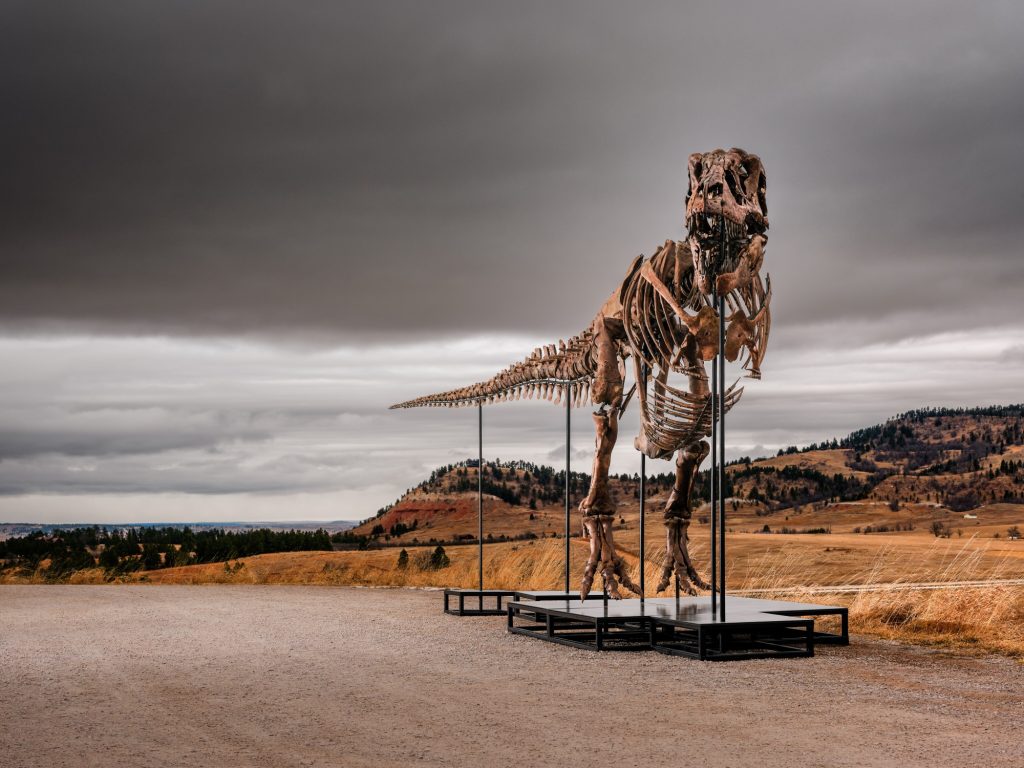
The global market for rare collectibles and historical artifacts has witnessed another landmark transaction. A Tyrannosaurus rex (T. rex) skeleton nicknamed “Gus” was sold at a Sotheby’s auction in New York for $50.1 million, making it the most expensive dinosaur fossil ever sold at auction.
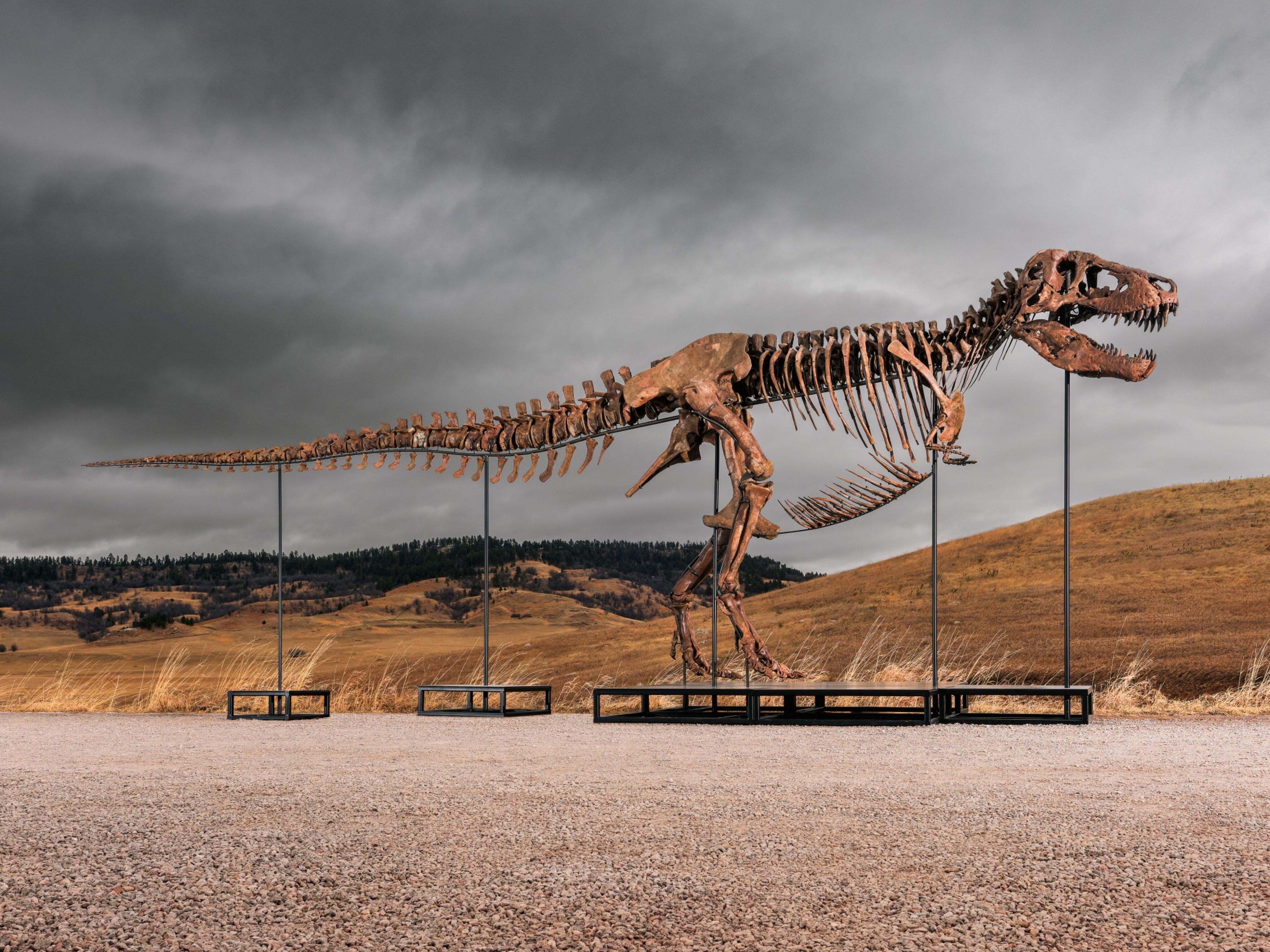
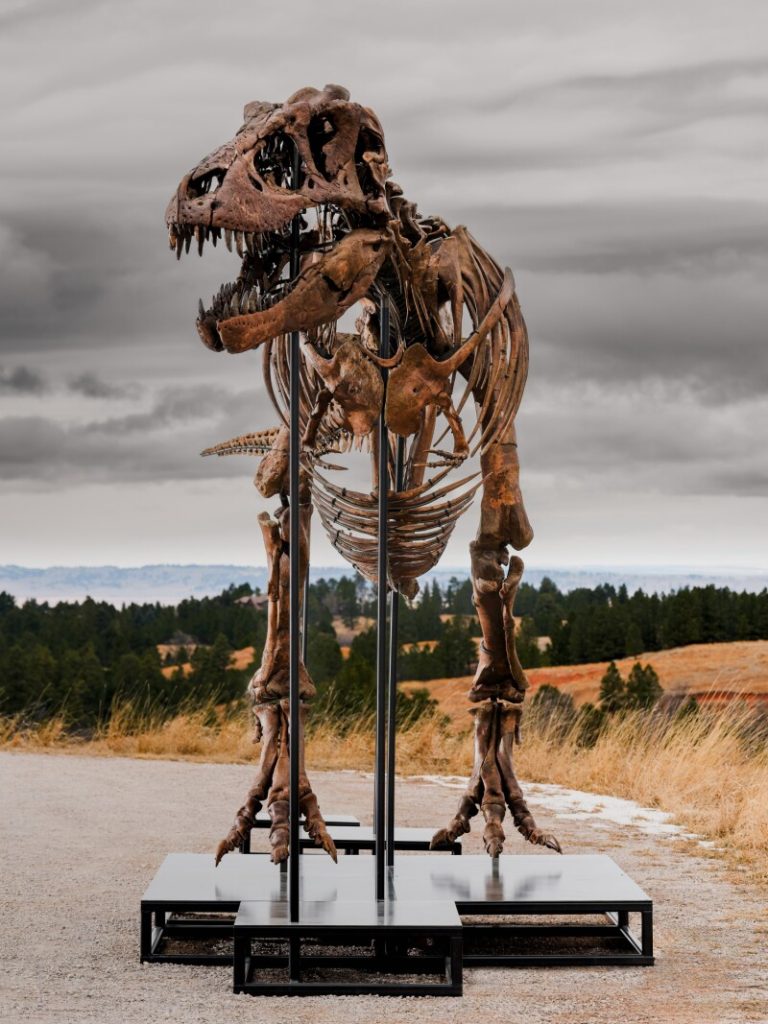
Estimated to be around 67 million years old, the fossil was excavated in South Dakota between 2021 and 2023. Due to its exceptional state of preservation and remarkable completeness, Gus is considered one of the finest known T. rex specimens. The skeleton measures approximately 11.6 meters (38 feet) in length, 3.8 meters (12.5 feet) in height, and consists of 183 fossilized bones. Paleontologists have also identified signs of healed fractures and injuries, offering valuable insights into the life and survival of one of history’s most formidable predators.
The final hammer price far exceeded Sotheby’s pre-sale estimate of $20–30 million, surpassing the previous auction record for a dinosaur fossil, which had been set by the Stegosaurus specimen “Apex.” The result underscores the growing strength of the global market for natural history collectibles, where rarity, authenticity, scientific significance, and preservation quality can elevate an object to a value of tens of millions of dollars.
In recent years, major auction houses such as Sotheby’s and Christie’s have expanded their presence in the market for exceptional fossils. Although these specimens are not traditionally classified as fine art, they increasingly share many of the same market dynamics: competitive bidding, international collectors, museum interest, and long-term investment potential. Today, many high-net-worth collectors view rare fossils as alternative assets, alongside blue-chip artworks, classic automobiles, rare watches, and exceptional gemstones.
The sale has also reignited debate within the scientific community. Because the buyer has chosen to remain anonymous, some paleontologists have expressed concern that such an important specimen could disappear into a private collection, limiting access for future research. Others argue that private collectors play a significant role in financing excavation, conservation, and preservation efforts that might otherwise be impossible.
Regardless of the debate, the sale of Gus demonstrates how the boundaries between science, history, collecting, and investment continue to blur. As demand for unique and irreplaceable objects grows, the market for natural history specimens is increasingly becoming an important segment of the broader global collectibles and art investment market.
Share It